
Crown CRN-CTD-8125-US Ct 8X125W Dante Amp Us Ver
 Share
Share
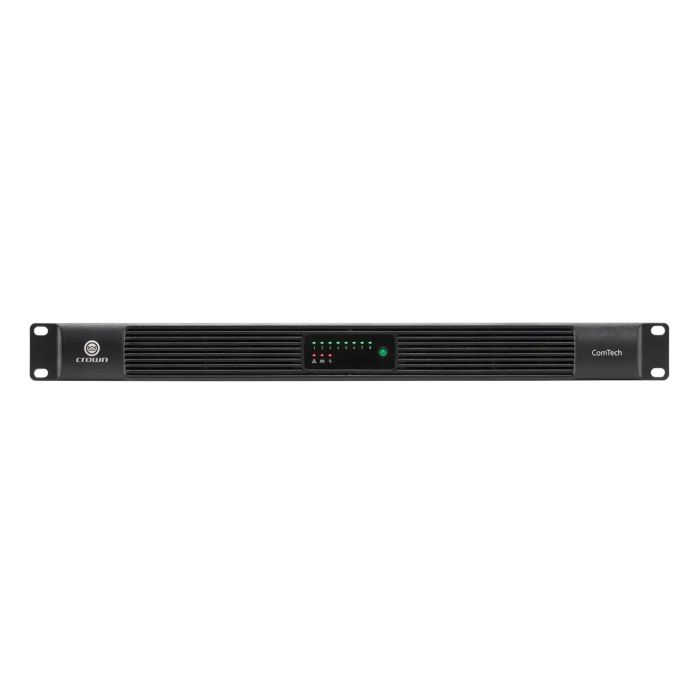
- Brand new in original box
- Full Crown manufacturer's warranty
- Free shipping in the continental US
In stock
- SKU
- CRN-CTD-8125-US
Description
Crown CRN-CTD-8125-US CT 8×125W Dante Amplifier
The Crown CTD-8125 is a compact, networked amplifier built for sound operators and venue techs who need reliable multi-channel amplification in tight rack space. Its 1RU footprint delivers eight independent 125W channels without requiring proprietary control software, making integration into existing system infrastructures straightforward and dependable. This US version brings Dante networking, built-in DSP, and multi-protocol control compatibility to mid-sized venues, houses of worship, and distributed audio installations—keeping your rig flexible and your troubleshooting simple.
Power & Channel Architecture
Eight channels of 125W output per channel at both Low-Z and Hi-Z impedance settings let you match speakers across a single amplifier without adapters or compromise. Each set of four channels shares 500W of available power, meaning the amp delivers sustained output across all channels simultaneously without dynamic compression or limiting surprises during a performance.
Networking & Control
Native Dante audio networking eliminates analog cable runs, while built-in DSP enables channel processing directly on the amplifier. Support for HControl protocol allows integration with BSS OMNI and AMX MUSE control systems, and configuration is handled through a standard web interface—no Crown-specific software installation required on control computers.
Key Features
- Eight independent channels at 125W output per channel
- Low-Z and Hi-Z impedance switching on all channels
- 1RU rack-mount form factor
- Dante audio networking input and output
- Built-in digital signal processing (DSP)
- Web-based configuration interface
- HControl protocol support for BSS OMNI and AMX MUSE systems
- 500W shared power per four-channel set
The CTD-8125 pairs efficient power delivery with networked flexibility, giving you a dependable solution for installations requiring multiple amplified zones in a compact package.
More Information
| Condition | New |
|---|
Reviews
At a Glance
The Crown CTD-8125 is an 8-channel networked amplifier delivering 125W per channel in a single rack unit, designed for installed sound systems, live venues, and houses of worship. Live sound operators and system installers choose it for native Dante networking that eliminates analog cable runs, built-in DSP processing, and multi-protocol control compatibility (BSS OMNI, AMX MUSE) that integrate seamlessly into existing infrastructure. Its flexible impedance switching and sustained power across all channels make it dependable for mid-sized distributed audio installations without surprises during performance.
Who This Is For
Great for
- ✓ Live Performance
- ✓ Studio Sessions
- ✓ Installed Audio Systems
Not the best pick for
- – Home Recording
- – Practice
Skill level: Professional
Frequently Asked Questions
What does Dante networking on this amplifier do?
Dante audio networking allows digital audio to travel over standard Ethernet, eliminating long analog cable runs. The CTD-8125 has both Dante input and output, so it can receive networked audio directly and send signal to other Dante devices on the same system.
Can I use this amp with my existing control system?
Yes. The amplifier supports HControl protocol for integration with BSS OMNI and AMX MUSE systems, and configuration is handled through a standard web interface—no Crown-specific software required on control computers.
What impedance settings does it support?
All eight channels switch between Low-Z and Hi-Z impedance, so you can match speakers or loads flexibly across a single unit.
How much power is available across all channels at once?
Each set of four channels shares 500W of available power, so the amplifier can deliver sustained 125W output across all eight channels simultaneously without dynamic compression or limiting.
What kind of DSP does it have built in?
The CTD-8125 includes built-in digital signal processing for channel-level processing directly on the amplifier; specific DSP tools and parameters are configured through the web-based interface.
Compare With
Similar Gear
Complete the Rig
Gear that pairs well with this.
✨ For You
Based on what you've been looking at.